
Transforming Labs with AlphaFold
- Jul 13, 2025
- 3 min read
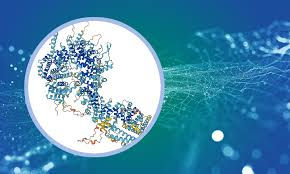
We've all heard the buzz about AI taking over the world. From self-driving cars to chatbots, there is no barrier to what AI can already achieve. But while these applications often steal the spotlight, some of the most impactful uses of AI are happening behind the scenes, in fields you might not think about every day. So today, let’s steer away from the sci-fi and peek into a medical field where AI is actually doing the heavy lifting right now: the lab.
Specifically, let’s get acquainted with some of Google DeepMind’s brainchildren that are already turbocharging biology: AlphaFold, AlphaGenome, AlphaMissense, and AlphaProteo. Today’s star? AlphaFold: the protein-predicting powerhouse.
The Protein Whisperer
All four of these tools revolve around proteins, and AlphaFold leads the pack. Think of it as an ultra-smart guesser that can predict the 3D shape of a protein just by looking at its genetic blueprint.
And it’s not just a theory. AlphaFold has built a single database with structures for more than 200 million proteins. That’s like having Google Maps for the entire protein universe. Oh, and it doesn’t just hand you predictions, it tells you which parts might be a little fuzzy, thanks to confidence scores.
So far, AlphaFold has:
Over 2 million researchers using its predictions in 190 countries
A huge impact in low- and middle-income nations with 600,000+ users
Contributed to disease research: 21% of papers citing AlphaFold focus on diseases
Saved humanity an estimated 1 billion years of research (yes, billion with a 'b')


Real-World Research:
Stopping Malaria
So how does this actually help in practice? Take malaria, for example.
To tackle this mosquito-borne disease, researchers needed a precise model of Pfs48/45 (a protein found on mosquito gametes, which are their reproductive cells). Experimental methods fell short, until they brought AlphaFold’s predictions into the mix. Once they matched their own work with AlphaFold’s model, they got the breakthrough they needed to move into preclinical and clinical research.
Combating Osteoporosis
When it comes to osteoporosis, time is critical. Once bone density is lost, getting ahead of it is key. Researchers can now sequence a patient’s genome, use AlphaFold to predict the protein structures from both healthy and mutated genes, and compare them. The differences point to what’s driving the disease in a much faster manner than traditional methods.
One study published this January in Nature — “Comprehensive bioinformatics analysis reveals novel potential biomarkers associated with aging and mitochondria in osteoporosis” — did exactly this, using AlphaFold to accelerate their search for new treatments and have been successful in their attempts.
Antibiotic Resistance
Bacteria constantly evolve resistance to antibiotics. One way they do this is by producing enzymes (specialized proteins that break down the drugs designed to kill them). Figuring out these enzyme structures by hand is challenging, but AlphaFold makes it faster and more accurate.
For example, a recent paper published in March 2024 — “AlphaFold-assisted structure determination of a bacterial protein of unknown function using X-ray and electron crystallography” — shows exactly how researchers are using AlphaFold to speed up bacterial protein research right now.
Shedding Light on Parkinsons
AlphaFold is also proving valuable for neurodegenerative diseases like Parkinson’s. About 10% of patients have a form caused by a mutation in PINK1, a gene that helps clear out excess mitochondria. When this system fails, dopamine-producing nerve cells start to die. Therefore, Researchers have used AlphaFold to predict what this mutated protein looks like, helping them understand its impact and develop better treatments faster.
Conclusion

In short, AlphaFold is giving researchers a huge head start by solving one of the biggest puzzles in biology: understanding what proteins look like and how they function. By removing this bottleneck, scientists can move much more quickly into drug discovery, vaccine development, and clinical research. So, while AI often grabs headlines for its futuristic promise, AlphaFold shows it’s already having a powerful real-world impact: helping science move faster than ever before.
Sources


